



 Thursday, 26 June 2025 11:37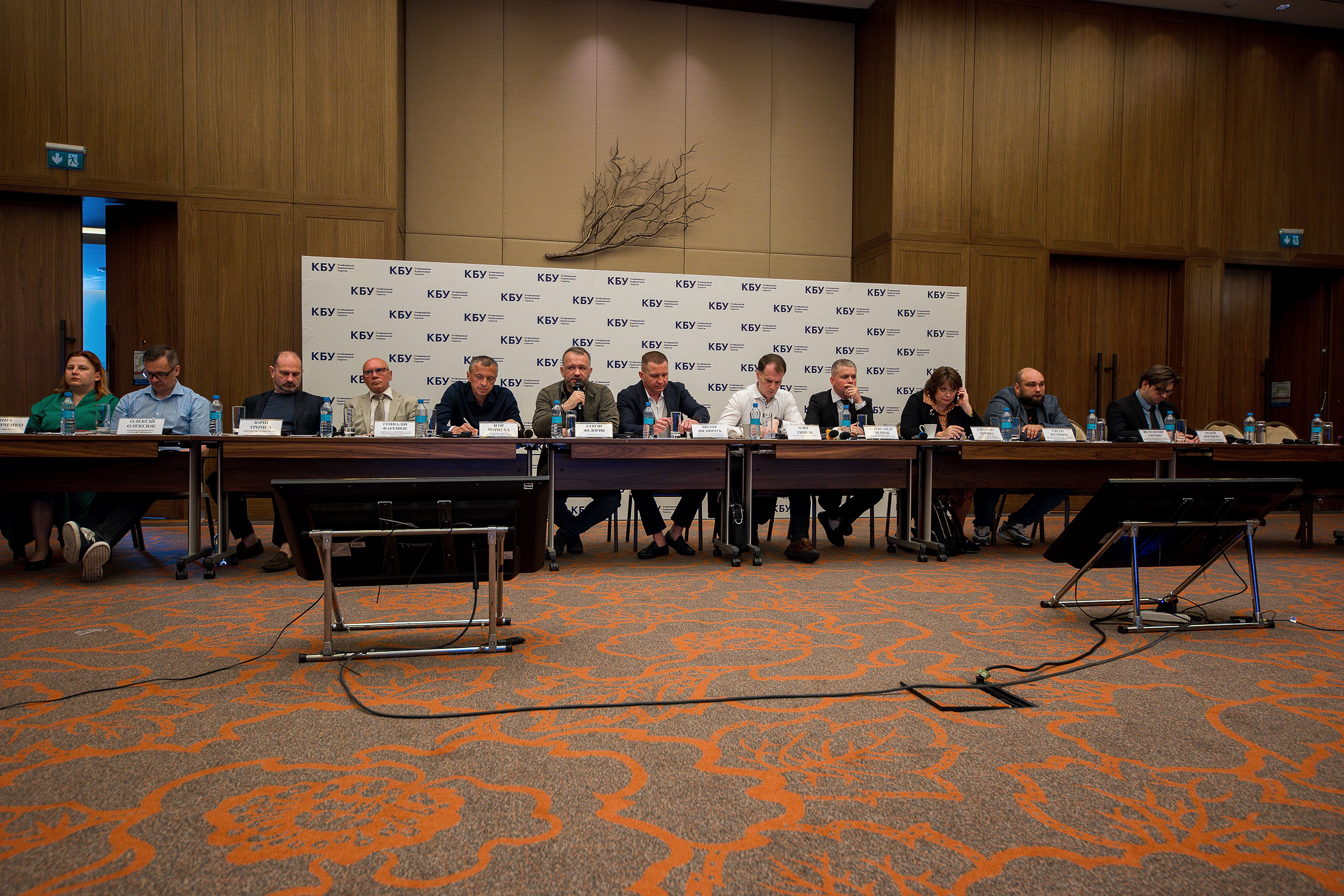
🌐🤝How Ukrainian Businesses Collaborate with the EBRD: Implemented Projects and Challenges
During the first block of the CBU Business Day, held on June 18, 2025, with the participation of EBRD representatives, Ukrainian business leaders shared their experiences in implementing projects in partnership with the European Bank for Reconstruction and Development (EBRD), the challenges they faced, and how they overcame them. The discussion was moderated by Oleg Tymkiv, former Strategy and Finance Director of the DTEK Group and former Managing Partner of PwC Ukraine.
💰Marko Štermšek, Chief Economist of the EBRD’s Strategy and Policy Implementation Department, reminded participants that the Bank is the largest institutional investor in Ukraine, having invested over €7.1 billion since the beginning of the full-scale invasion. The EBRD places particular emphasis on the restoration of human capital, recognizing that challenges related to the shortage of skilled labor could hinder reconstruction and economic growth.
🚚Viktor Pylypchuk, Infrastructure Development Director of the Nova Poshta Group in 2015–2024, spoke about the implementation of projects to construct new logistics centers in partnership with the EBRD. Among the key advantages of cooperation, he highlighted obtaining EBRD partner status, favorable financing terms (€9.5 million over 7 years), and legal protection within European legal and judicial institutions. Special attention during project implementation was given to labor relations, occupational health and safety, efficient resource use, and the prevention and control of environmental pollution.
✔️Sergii Fedorik, Founder of the international engineering company KEY GROUP, identified the main factors for successful cooperation with the EBRD: meeting professional standards, prioritizing occupational and industrial safety, high-quality communication with no language barriers, and the company’s social responsibility.
🏗️Igor Chornukha, CEO of PJSC “LUTSKSANITECHMONTAZH No. 536”, shared his experience in reconstructing heating networks in the city of Lutsk. He noted the transparency of qualification requirements, clear procurement procedures, and financial stability as advantages of working with the EBRD. At the same time, he pointed out the complexity of meeting the Bank’s demanding financial and bureaucratic conditions.
🌊Borys Dudenko, General Director of Mykolaivvodokanal, spoke about the implementation of the water supply and wastewater infrastructure reconstruction project in the city of Mykolaiv. Despite the complexity of the situation, the team managed to promptly complete all necessary bureaucratic procedures. However, the war introduced new challenges that required the revision of previously approved decisions and significant changes to the technical aspects of the projects. According to the speaker, the EBRD responded swiftly and continued its support under the revised conditions.
💥Special attention was given to the experience of working with the EBRD on highly complex facilities — specifically, the construction of the New Safe Confinement over the destroyed reactor unit at the Chornobyl Nuclear Power Plant. Gennadiy Farenyuk, Director of the State Research Institute of Building Constructions, outlined the specifics of designing, constructing, installing technological systems, and subsequently dismantling unstable structures using remote-controlled equipment.
💬“A focus on people will remain one of our strategic priorities. We apply various instruments and provide technical support to companies that place a strong emphasis on Human Resources. We are already working on creating opportunities for the reintegration of veterans, encouraging the involvement of women in construction professions, offering economic support for skills development, and engaging other underrepresented population groups in the construction sector. We also have a range of technical support tools that are implemented on a continuous basis: CAPEX (capital investments), co-investment, grant funding, and more. These resources help companies provide training, establish new production lines to increase productivity, and adapt workplaces to the needs of employees (ramps, elevators, etc.),” said Marko Štermšek.
The discussion demonstrated that cooperation with the EBRD opens wide opportunities for Ukrainian businesses to attract investment, implement high standards, and carry out infrastructure projects, while also demanding a high level of transparency, responsibility, and adaptability in wartime conditions.
🌐 Read more about the key topics discussed at CBU Business Day at the link:
https://kbu.org.ua/en/news/the-cbu-business-day-and-the-extended-meeting-of-the-board-of-directors-of-the-cbu-took-place
📸 Photo galleries:
👉 Album 1:
https://www.facebook.com/media/set/?set=a.1140327234780307&type=3
👉 Album 2:
https://www.facebook.com/media/set/?set=a.1140467504766280&type=3
Organizers: Confederation of Builders of Ukraine
Strategic business-partners of the CBU: East Office of Finnish Industries Oy, SKAKO Concrete A/S, NOCON NORWEGIAN CONSTRUCTION AS
Industry partner: CONSTRUCTION WORKERS' UNION of UKRAINE - Profbud
Partners: The multi-donor initiative Skills4Recovery is funded by the European Union, Germany, Poland, and Estonia. It is implemented by the Deutsche Gesellschaft für Internationale Zusammenarbeit (GIZ) and Solidarity Fund PL (SFPL).
With the support of: All-Ukrainian NGO “Living Planet”
Information partners: ProfBuild, Build Portal, Property Times, StroyObzor, Ukrainian Pohliad, NewsWeek, Marketer, Chas Pershykh
WE WILL WIN AND REBUILD EVERYTHING! 💪
TOGETHER TO VICTORY!
GLORY TO UKRAINE! 💙💛