



 Wednesday, 16 July 2025 12:18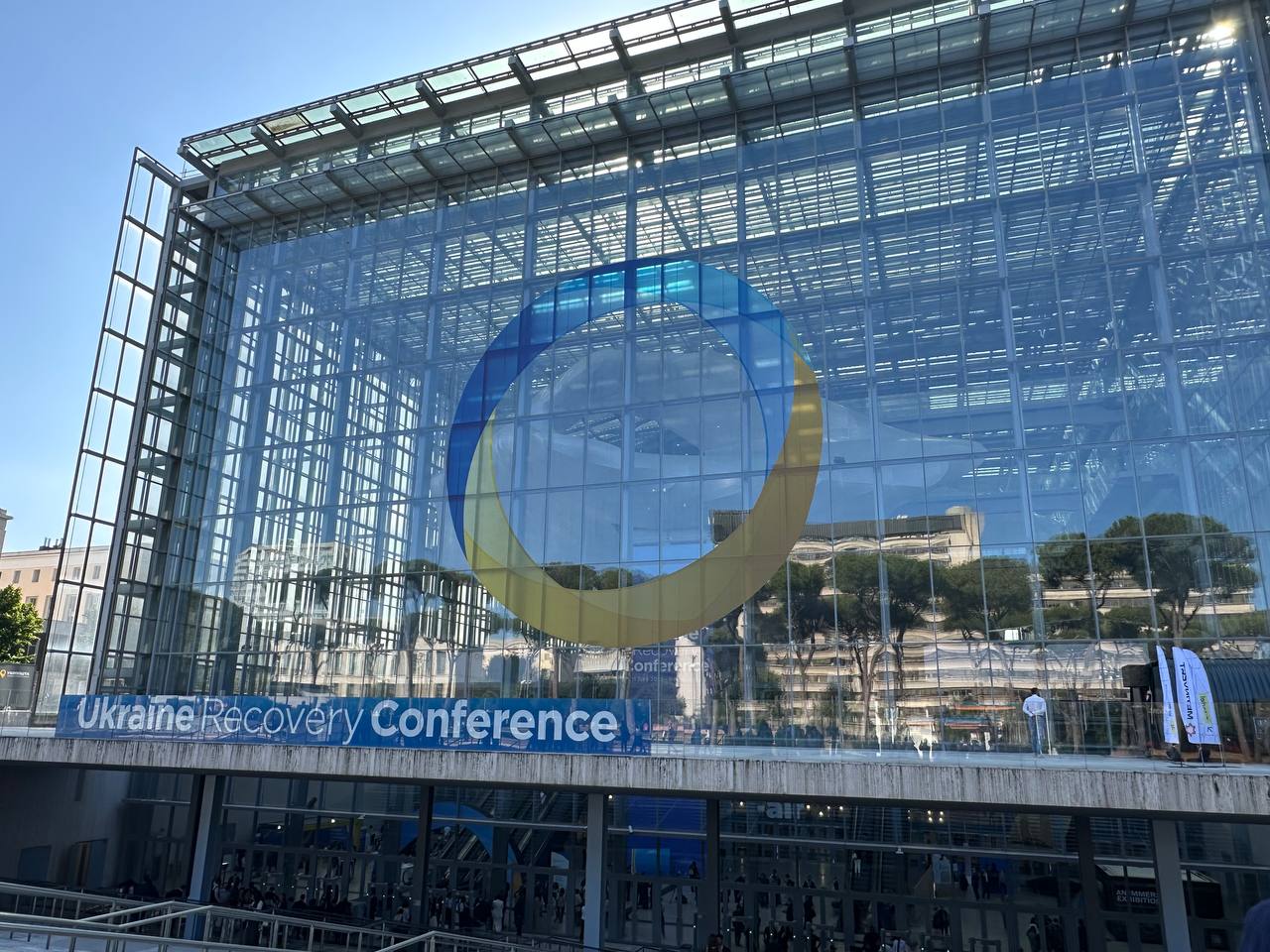
🌿🏗️Green Recovery of Ukraine: A Sustainable Path to the Future
Oleksandr Chervak, CEO of the Confederation of Builders of Ukraine, shared the key outcomes of the special event "GREEN RECONSTRUCTION OF UKRAINE", held as part of the Ukraine Recovery Conference #URC2025, with the participation of representatives from the Governments of Ukraine, Italy, Moldova, the European Commission, the business community, and experts in green innovation.
A sustainable approach to recovery means not only the use of high-quality materials and modern technologies but also transparent implementation mechanisms: anti-corruption efforts and compliance with international standards.
Particular attention is paid to involving small and medium-sized businesses. For European companies, this is an opportunity to become full-fledged partners in creating Ukraine's new infrastructure.
💰One of the significant signals of support was the recent initiative of the Italian Parliament to establish a special €300 million fund aimed at supporting Ukraine’s recovery.
Participants of the event noted that although there is still a lack of full coordination, clear technical regulations, and sufficient funding, the steps already taken are essential.
📜One such step is the discussion of the draft law “On the Principles of Green Recovery of Ukraine,” which aims to establish clear rules for transparent investment and sustainable construction.
This document seeks to remove barriers to sustainable investment: it defines the concept of “green” projects, sets clear criteria for their environmental impact, lays the groundwork for the introduction of financial instruments – such as green bonds – and opens the way for funding through the Ukraine Facility and other international mechanisms.
The next step is the development of the Green Recovery Strategy of Ukraine, which will enhance process transparency, ensure legal predictability for both public and private investors, and enable broader stakeholder engagement.
Key focus areas include:
✔️Implementation of NZEB (Nearly Zero-Energy Buildings) and ZEB (Zero Emission Buildings) standards;
✔️Application of circular economy principles;
✔️Environmental certification;
✔️Use of renewable energy sources;
✔️Modernization of engineering infrastructure: water, heating, and electricity supply systems.
👷Green reconstruction is also an opportunity to shape a new labor market, particularly for the reintegration of veterans returning to civilian life. There is high demand for construction workers, but the need is rapidly growing for engineers, energy auditors, environmental management specialists, logisticians, and project managers.
🔎During the event, a national standard was presented that defines environmental criteria and an assessment method for public buildings. The standard provides for the evaluation of enhanced environmental characteristics of public buildings and structures at the stages of design, construction, commissioning, operation, repair, and decommissioning.
Among the criteria are: management, infrastructure and sustainable territorial development, indoor comfort and safety, waste management, environmental protection, life safety, construction materials, water and energy efficiency.
Much has already been done, but Ukraine still has much to learn, which is why knowledge exchange, training courses, and similar initiatives are essential.
For example, foreign companies can offer methodologies for waste management or construction technologies using biomaterials: building with wood and hemp, environmentally friendly cement production, and waste recycling. European businesses are ready not only to build housing but also to transfer technologies and establish networks of cooperation.
Architects designing new neighborhoods emphasize safety, accessibility, and creating opportunities for life and development. Often, the main goal is not just to provide housing and restore infrastructure, but to create a cohesive community, unite people, and build a place they will want to call home.
👤At the center of everything is the individual — their safety, comfort, and new employment opportunities.
🌃For example, an eco-neighborhood in Tetiyiv was presented. The project was organized in a way that minimizes energy needs and maximizes building efficiency. As a result, the buildings are 70% more efficient than new residential construction in Europe, with 40% lower CO₂ emissions and up to 65% self-sufficiency thanks to a photovoltaic system.
A reconstruction project for Saltivka (Kharkiv) was also presented. Since some buildings were destroyed and demolished, and others are suitable for restoration, the plan is to repair the damaged ones, build new structures within the master plan, and connect people through public spaces to create a cohesive community. In addition, the surrounding space is to be reimagined, taking into account the current state and the needs of the residents.
♻️The opportunities of the EU LIFE Debris2Resource project were discussed. The project envisions collaboration between European and Ukrainian stakeholders to address the issue of waste management and is scheduled to launch in December 2025. It aims to create a replicable methodology for managing construction debris to enable cyclical removal and reuse of construction waste, focusing on the sorting of materials such as crushed concrete, iron, wood, and hazardous substances.
An approach was presented for creating new construction materials from debris of destroyed buildings. A Belgian scientific organization studies the remains of demolished structures, extracts minerals, and creates a new material — an alternative to cement.
Special attention was given to the clean cement plant in the Mykolaiv region. The latest technology allows for a tenfold reduction in CO₂ emissions compared to traditional cement production. Ukraine has the potential not only for domestic construction but also for the export of eco-friendly materials across Europe.
Ukraine is already actively implementing the principles of sustainable reconstruction, shaping modern approaches — but there is still much work ahead.
🤝The event was organized by FIEC EU, its Italian member Ance, the Confederation of Builders of Ukraine (CBU), and EIC – European International Contractors, in cooperation with Neo-Eco Ukraine.
WE WILL WIN AND REBUILD EVERYTHING! 💪
TOGETHER TO VICTORY!
GLORY TO UKRAINE! 💙💛