



 Monday, 18 May 2026 11:00
🏥 What Future Hospitals Will Look Like: New Standards of Design and Safety
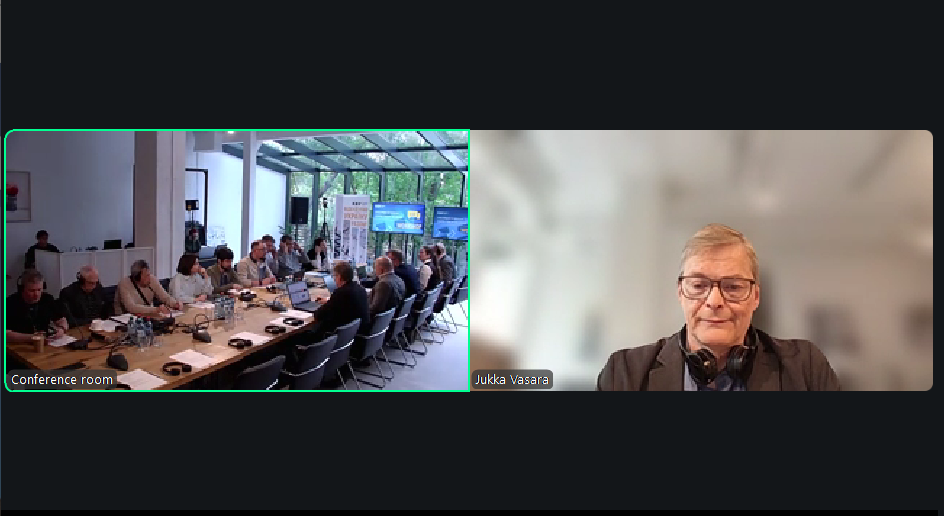
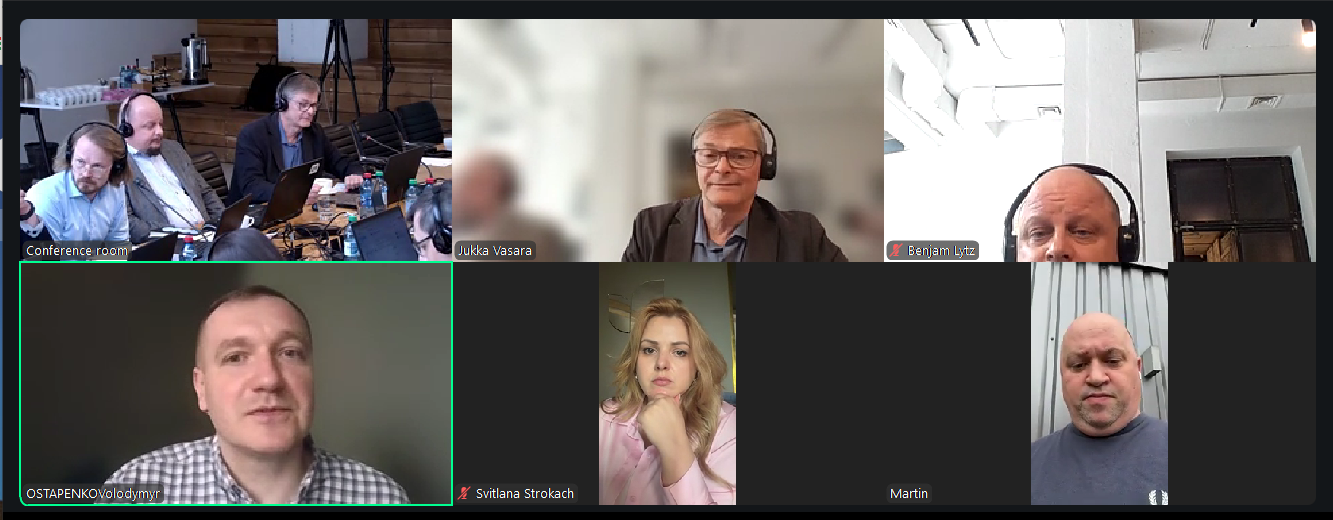
🗓️ On May 12, 2026, an IHDA workshop was held dedicated to the technical design of healthcare facilities and the organization of medical spaces in shelters.
Jukka Vasara, Vice President of Granlund Oy, noted that the standard healthcare design concept in Ukraine, implemented with the support of the Confederation of Builders of Ukraine, the Ministry for Communities and Territories Development of Ukraine, and the Ministry of Health of Ukraine, foresees the creation of a standardized hospital model with the ability to scale and adapt to the needs of different communities.
🏙️ In continuation of the discussion, participants emphasized the importance of aligning conceptual decisions with the practical conditions of project implementation in Ukraine, particularly in the context of rebuilding healthcare infrastructure and adapting it to modern challenges.
🗨️ «It is important that design costs are taken into account in the concept. The approach should предусматривать open spaces without load-bearing walls, lightweight structures, and alternative layout solutions, especially for a typical hospital, allowing flexible placement of functional zones, including wards, in different parts of the building. At the same time, many hospitals have been destroyed, and in some cases it is advisable to consider not only reconstruction, but also new construction or hybrid solutions integrating new buildings into existing infrastructure», - noted Jukka Vasara.
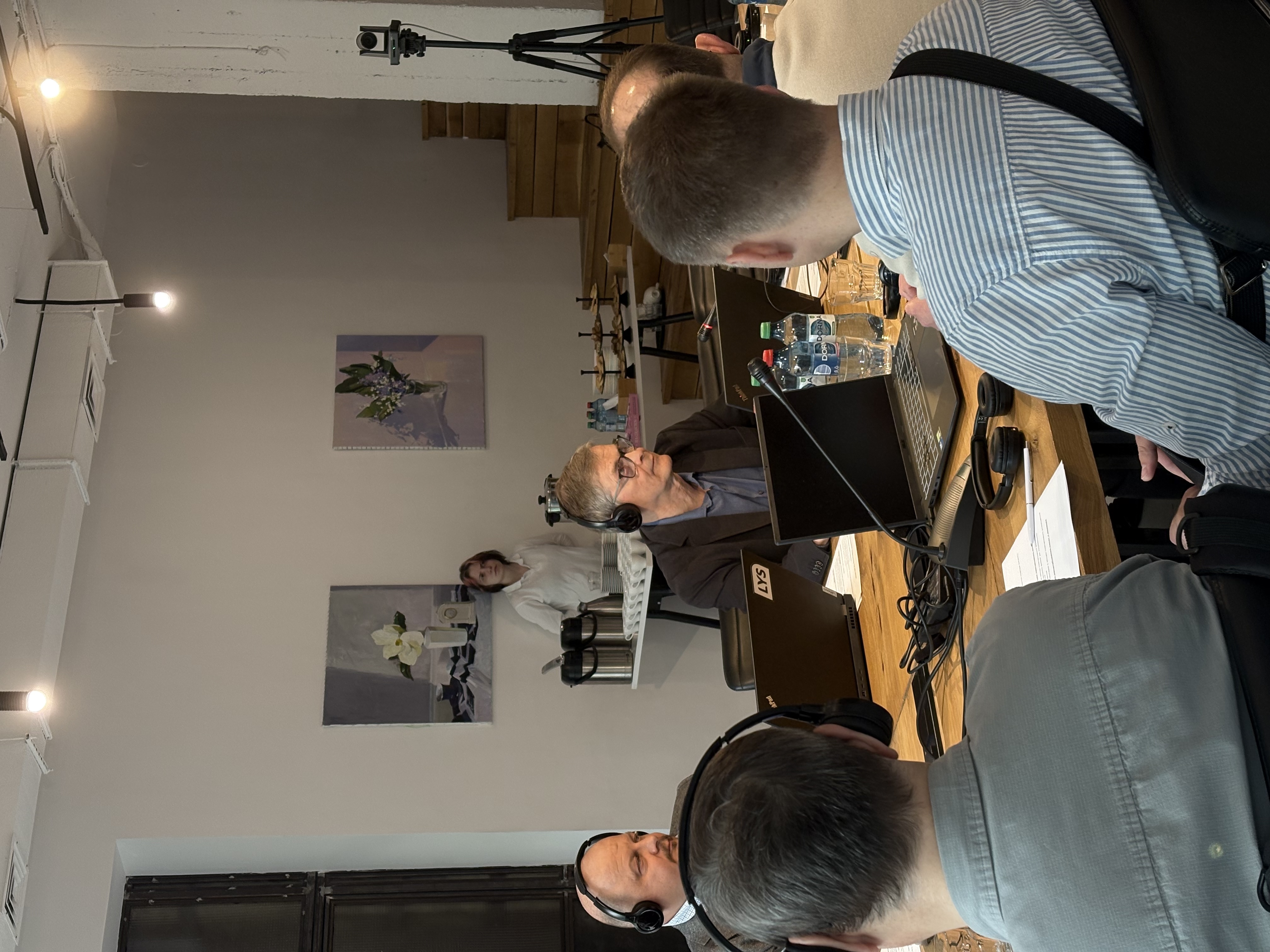
🪖 In this context, Oleksandr Chervak, CEO of the CBU, emphasized the prototype nature of the project and the need to combine regulatory requirements with the realities of wartime conditions, with a particular focus on more efficient use of underground levels as a functional component of hospitals.
🗨️ «This is not just a typical project, but a prototype hospital construction project, so we face the challenge of shaping it in accordance with all current standards and realities. It is important to functionally load the basement area so that it serves not only as a shelter, but also meets the operational needs of the hospital», -said Oleksandr Chervak.
🧩 In addition, representatives of Finnish companies IHDA focused on modular design approaches aimed at reducing timelines and costs, decreasing resource intensity, and increasing sustainability through material reuse, as well as reviewing hospital examples and shelter integration concepts. They also paid attention to structural solutions based on grid systems, sandwich panels, lightweight frames, and precast concrete, which ensure thermal and acoustic insulation, fast implementation, and guaranteed construction quality.
🛣️ Attention was also given to the production and logistics of precast structures, which, thanks to automation, can partially compensate for labor shortages. At the same time, Pekka Narinen, COO of A-INS group, noted that in some cases such solutions may be more expensive than monolithic ones, and their implementation requires careful consideration of logistics and project scale in Ukrainian conditions.
🗨️ Oleg Petryk, Chief Technical officer of ABMK, emphasized the importance of BIM modeling and early definition of building parameters: «It is very important to understand the size of the building and how large it will be, and thanks to Delta precast beams we can achieve lower floor heights during hospital design development, although everything depends on the current price situation».
🏭 Participants highlighted the advantages of modular construction, while also pointing out the limited production capacities in Ukraine and the need for early project planning. In this context, Anatolii Berkuta, Vice President of the CBU, stressed the need to adapt standard solutions to real construction conditions: «Within a specific project, we carry out calculations and determine which solutions are most effective. At the same time, when moving into the field of precast structures, it is necessary to consider who manufactures them and where. Logistics remains a key factor: whether production is localized in Ukraine or components need to be transported from abroad. Therefore, it is essential to discuss these challenges already today. A standard approach is certainly needed, but it must reflect the real conditions of construction in Ukraine».
👥 Earlier, on May 11, 2026, during visits to three hospitals in Kyiv, IHDA representatives examined practical solutions already applied in Ukrainian medical facilities - from oxygen supply systems to backup power supply and the organization of hospital engineering infrastructure. This practical experience became the basis for further technical discussions during the workshop.
⚙️ Participants focused on ventilation, air conditioning, heat supply, energy resilience, and the functioning of medical equipment under increased load and security challenges. In particular, they discussed modern HVAC systems, microclimate formation and zoning of premises according to functional purpose, summer temperature regimes for hospitals, as well as approaches to ventilation in operating rooms and specialized areas.
🌡️ Particular attention was given to hospital heating systems and uninterrupted operation. Discussions covered district heating, autonomous boiler houses, cogeneration units, backup water supply, and alternative energy sources. Participants also reviewed a scalable hospital model with n+1 redundancy for critical systems, integration of diesel generators, UPS systems, transformer substations, and solar panels, as well as additional protection of healthcare energy infrastructure.
🫁 Another key topic was ensuring continuous operation of medical equipment and oxygen supply systems. Participants discussed the use of oxygen tanks and generators, their placement requirements, and the adaptation of European standards and technical solutions to Ukrainian regulations and healthcare system needs.
🛡️ Representatives of IHDA focused on integrating shelters into modern hospital structures - from local protected zones and reinforced corridors to full underground medical blocks with operating rooms, intensive care, and diagnostic facilities. At the same time, discussions centered on ventilation, air filtration, water supply, and maintaining a safe indoor climate in shelters, as well as approaches to integrating them into daily hospital operations so that these spaces remain functional not only during emergencies.
🗨️ During the discussion, Henry Pesonen, Director of Nordic Healthcare Group, emphasized patient and staff safety: «A shelter for a medical facility today is a mandatory requirement. However, it is important to define the purpose of such a shelter and align minimum requirements, medical objectives, and implementation costs. It is also necessary to consider the actual hospital capacity and the need for safe movement of less mobile patients».
📍 Following the workshop, participants agreed on approaches to hospital functional zoning and internal flow organization, and identified the next stage of work as the visualization of patient movement scenarios, taking into account the developed engineering, technical, and safety solutions.
WE WILL WIN AND REBUILD EVERYTHING! 💪
TOGETHER TO VICTORY!
GLORY TO UKRAINE! 💙💛